

💡 Introduction
Modern sports fields require much more than just bright lights — they need precise uniformity, zero flicker, and color consistency suitable for high-definition broadcasting. Whether it’s a football stadium, tennis court, or community sports ground, LED flood lights have become the gold standard for performance and energy efficiency.
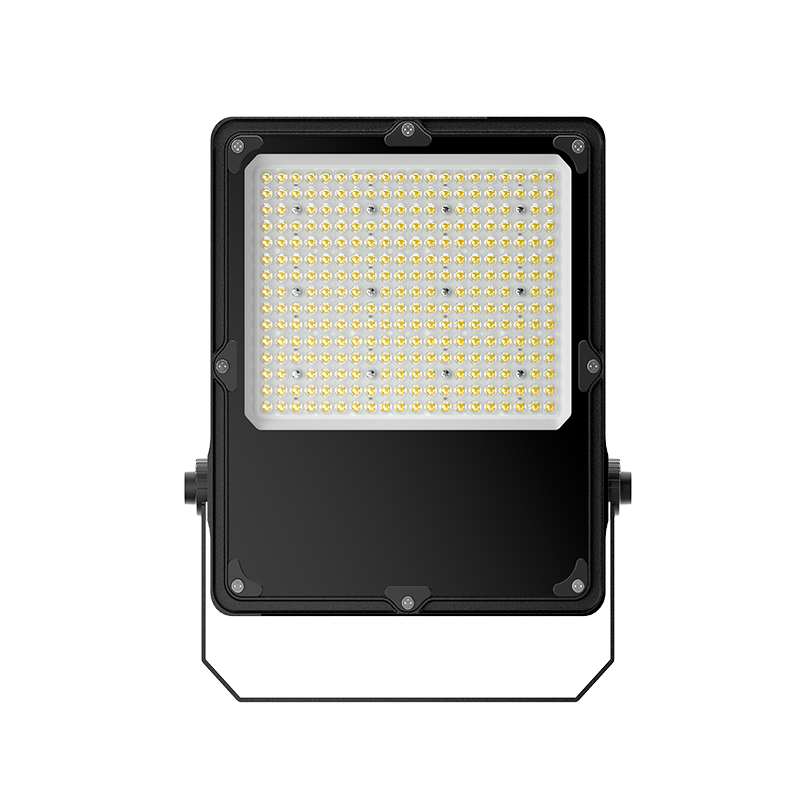
Partnering with specialized Led Flood Lights Manufacturers ensures every luminaire is optimized for the demanding needs of professional sports and televised events.
🔹 1. Why Uniformity Matters in Sports Lighting
Uniformity defines how evenly light is distributed across the playing surface. Poor uniformity causes glare, shadow spots, and unfair play conditions.
Industry standards (such as EN 12193, IES RP-6) recommend:
-
Main sports fields: Minimum uniformity ≥0.7
-
Training grounds: Uniformity ≥0.5
-
Spectator areas: Uniformity ≥0.3
Uniformity is achieved by adjusting beam angles, mounting heights, and aiming points—all supported by detailed photometric designs from professional lighting engineers.
🔹 2. The Importance of Flicker-Free Illumination
Flicker may be invisible to the naked eye but is easily captured by slow-motion cameras, making it unacceptable for televised sports.
To achieve flicker-free performance:
-
Use high-frequency constant-current drivers (≥25 kHz)
-
Maintain stable power supply (low ripple current <5%)
-
Ensure PWM-free dimming for smooth brightness control
Top-quality fixtures tested under IEEE 1789 or IEC TR 61547-1 standards guarantee flawless lighting for high-speed recording.
🔹 3. Recommended Lighting Levels
| Sport Type | Illuminance (lux) | Uniformity (U0) | Flicker Requirement |
|---|---|---|---|
| Amateur Fields | 200–300 | ≥0.5 | <10% |
| Training Stadiums | 500–750 | ≥0.6 | <5% |
| Professional Games (HD TV) | 1000–1500 | ≥0.7 | <1% |
| International Broadcast | 1500–2500 | ≥0.8 | 0% visible flicker |
High-performance systems not only improve player safety and visibility but also create a visually stunning broadcast experience.
🔹 4. Advanced Optics for Sports Fields
Flood lights with narrow beam optics (10°–45°) are used for long-throw illumination, while wide beams (60°–90°) handle side coverage.
By combining multiple beam patterns, lighting designers achieve high vertical illuminance, ideal for tracking fast-moving objects on camera.
Many Led Panel Lights Manufacturers also produce indoor stadium lighting solutions that balance glare control and ceiling reflection for multipurpose arenas.
🔹 5. Smart Controls and Dimming Integration
Smart systems enable flexible scene control — for example, dimming lights to 50% for training or increasing brightness for televised matches.
Integrated DALI or DMX controls also allow dynamic lighting effects for opening ceremonies or entertainment events.
✅ Conclusion
Professional sports lighting combines engineering precision, optical performance, and electrical stability. By ensuring uniform illumination and flicker-free output, you guarantee an excellent experience for both players and spectators.
With the help of expert LED flood light manufacturers, stadium operators can achieve energy efficiency, visual excellence, and broadcast-ready lighting quality that meets international standards.