

💡 Introduction
When planning outdoor illumination for stadiums, ports, or industrial sites, lighting engineers often face a common decision: should they use single high-power LED flood lights or modular array systems?
Both designs have distinct advantages in terms of efficiency, maintenance, and flexibility. Collaborating with professional Led Flood Lights Manufacturers can help determine the best configuration for your specific application.
🔹 1. What Is a High-Power LED Flood Light?
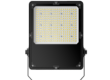
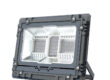
A high-power flood light combines multiple LED chips into a single housing with one large driver system.
✅ Advantages:
-
Compact design, easy installation
-
Powerful output from a single luminaire
-
Fewer mounting points needed
✅ Limitations:
-
Heavier structure, harder to handle
-
Heat concentration in one area
-
If one driver fails, the entire fixture may shut down
This design suits stadiums, airports, and highways where fewer, higher-output fixtures are preferable.
🔹 2. What Is a Modular Array System?
A modular flood light divides the fixture into smaller LED modules—each with independent optics and heat sinks.
✅ Advantages:
-
Excellent heat dissipation and reliability
-
Easier maintenance—replace a module instead of the entire unit
-
Flexible beam combinations for customized layouts
-
Lightweight structure for large-scale installations
✅ Limitations:
-
Slightly higher initial cost
-
More complex wiring for multi-module control
Still, modular systems are increasingly popular due to their scalability and long-term ROI.
🔹 3. Performance Comparison
| Feature | High-Power Flood | Modular Array |
|---|---|---|
| Efficiency | High (130–160 lm/W) | Very High (140–180 lm/W) |
| Heat Dissipation | Centralized | Distributed |
| Maintenance | Whole fixture | Module-by-module |
| Flexibility | Fixed optics | Adjustable per module |
| Weight | Heavier | Lighter |
| Lifespan | 50,000–70,000 hrs | 70,000–100,000 hrs |
For long-term outdoor projects, modular designs often deliver better reliability and easier upgrades.
🔹 4. Optical and Structural Benefits
Modular arrays offer more optical flexibility — different modules can use narrow or wide beam angles for mixed-area illumination.
They also simplify heat management, as each section dissipates heat independently, reducing thermal stress.
Working with large-scale LED Light Manufacturers ensures you get photometric data, simulation support, and tailored design recommendations before project execution.
🔹 5. Best Use Cases for Each Type
-
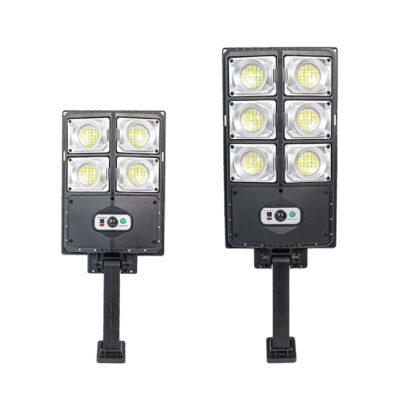
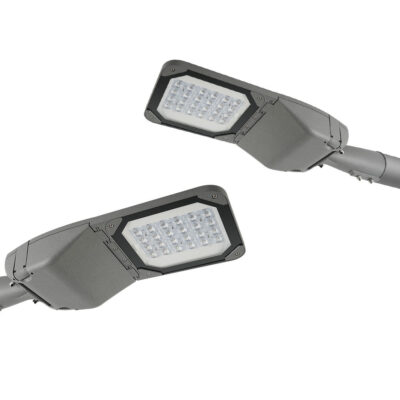 High-Power Floods: Ports, stadiums, tall masts (≥25m), outdoor sports fields
 -
Modular Arrays: Warehouses, industrial plants, airports, façade lighting
In hybrid installations, modular floods can be used for edge lighting while high-power units provide center coverage, optimizing light distribution and efficiency.
✅ Conclusion
Both high-power and modular LED flood lights deliver exceptional performance, but their suitability depends on project requirements.
For large-scale projects demanding easy maintenance, better heat control, and scalable output, modular arrays provide long-term reliability.
Meanwhile, single high-power fixtures remain the choice for concentrated illumination and quick installation.
By working closely with expert LED manufacturers, you can design balanced lighting systems that combine the strengths of both technologies for optimal efficiency and performance.